


Today, approximately one in six or seven families worldwide face fertility problems. On a Lithuanian scale, it is estimated that around 50,000 couples are unable to conceive, and these numbers continue to rise every year.
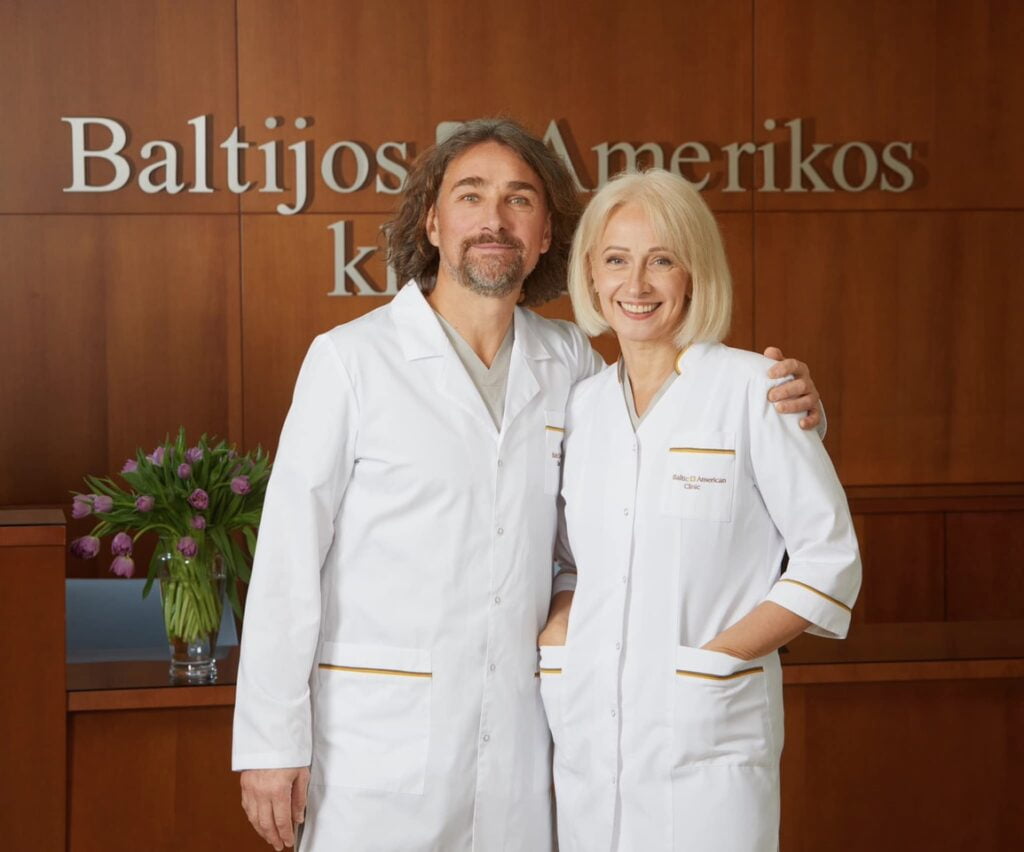
Having announced their partnership and return to “Baltijos ir Amerikos klinika” just this week, doctors Reda and Rolandas Žiobakai, who have worked in the field of fertility treatment for almost 20 years, will head the clinic’s refurbished Family Fertility Centre.
It has been announced that patients at the newly reopened fertility centre, following its refurbishment, will be welcomed by a larger team of medical professionals, upgraded equipment, a cosy environment, and a friendly, empathetic clinic staff. The doctors note that even before starting, they have already received numerous patient registrations, and they state that this fertility centre will stand out from others operating in the country. Here, alongside traditional fertility treatments, scientifically recognised principles of holistic medicine will be applied, focusing on male reproductive health and the emotional well-being of couples.
The idea to establish a different kind of fertility centre at “Baltijos ir Amerikos klinika”, where medical achievements are combined with the principles of holistic medicine, did not come by chance.
“We want the experience we have accumulated over many years to continue serving people. In our work, there is nothing more important than hearing the news of another pregnancy, of another new life being born. However, we should find joy not only in the result but also in the process itself, which is why we decided to adopt a different approach to fertility treatment and provide more psychological and emotional comfort to our patients. We want to dedicate more time to conversation, to listening, to looking patients in the eye, and to gaining a deeper understanding of how they are feeling at that moment,” says obstetrician-gynaecologist Reda Žiobakienė.
Obstetrician-gynaecologist Rolandas Žiobakas echoes the doctor’s sentiments, stating that we must not only slow down the pace of life—which is often a cause of fertility issues in active women—but also look at fertility treatment from the perspective of “slow medicine”. This does not mean that the entire treatment process should take longer; rather, it means creating a more relaxing, safe, and anxiety-free environment for couples undergoing fertility treatment.
“People already experience immense anxiety when they are unable to conceive, and when they enter today’s fertility treatment system, they become even more tense, often without realising that the emotions they are experiencing hinder rather than help their chances of successfully starting or expanding a family. We want to change this system, which is why we are introducing new ideas to apply principles of medicine in our practice that are based not only on science but also on the heart,” asserts doctor Rolandas Žiobakas.
“Heart-based medicine” is a new term that can best be described as combining a doctor’s professional knowledge with their genuine care for the patient.
They will pass on the knowledge they have gained to both patients and colleagues
The doctors Žiobakai recently returned from Denmark, where they visited one of the world’s leading fertility clinics in Skive. At this clinic, reproductive medicine specialists from all over the world learn the most advanced methods of fertility diagnosis and treatment.
“Continuing our tradition of knowledge sharing, we will pass on the insights gained at this clinic to our patients and colleagues. Here, we learned more about effective treatments that increase the chances of pregnancy after assisted conception procedures for women with adenomyosis and endometriosis. We have also expanded our knowledge of new diagnostic methods and treatment options for male infertility, which offer hope even in very difficult cases,” R. Žiobakas shares his impressions.
Infertility statistics are reaching record highs, but there is hope
Statistically, around 10–15% of couples of reproductive age face difficulties conceiving, and this percentage continues to rise over the years. For example, it is known that in the US, infertility rates have increased more than tenfold over fifty years. The situation in Lithuania is believed to be similar. So, what are the most common reasons behind these harsh statistics, and how do modern medical advancements and the latest technologies help infertile couples to have children?
The doctors assert that the greatest modern challenge to fertility is delaying family planning to a later stage in life, alongside an unhealthy lifestyle. Statistics show that by the age of 35, a woman’s chance of becoming a mother is half of what it was at twenty-five. While the rate of miscarriage for women under 30 is less than 8%, for women aged 38–39, the risk of miscarriage increases to 22%, and by the age of 42–43, the probability of miscarriage exceeds 45%. Male fertility also declines with age.
For this reason, egg freezing is rapidly growing in popularity, where a woman’s eggs are frozen and stored. More and more women, who delay pregnancy for various personal reasons, are choosing to use this technology.
Egg freezing is a method of fertility preservation that increases the chance of having children in the future. The doctor also recommends this procedure for patients who are prescribed treatment that could affect their fertility, such as chemotherapy or radiotherapy for cancer.
Egg freezing may also be recommended for patients who are at risk of early menopause or who have endometriosis.
Specialist treatments can also help to extend the fertile window. One of the latest methods is the ovarian rejuvenation procedure, known as PRP. During the ovarian rejuvenation procedure, the woman’s own platelet-rich plasma (PRP) is used. Following this procedure, a woman’s chances of conceiving naturally may increase.
Growing male infertility is a cause for concern
A couple’s fertility issues are no longer just a female problem. When looking at them individually, female and male factors each account for approximately 30% of all infertility cases. A further 20% of cases are of mixed origin, involving both female and male factors. For the remaining 10% of couples, the cause of infertility remains unexplained.
“Over the last 50 years, sperm counts have halved. These statistics are highly concerning because if this trend continues in the future, we may reach a point where men are no longer able to conceive naturally,” notes doctor R. Žiobakas.
 Declining sperm counts and motility are linked to the negative effects of radiation, heavy metals, and pesticides. Tobacco smoking, the use of cannabis, heroin, cocaine, and other drugs, as well as chronic alcoholism, unequivocally have a negative impact on both male and female reproductive function. Intense physical activity (e.g., long-distance running, exhausting workouts) disrupts ovulation in women and reduces sperm count in men. An unbalanced diet (high in carbohydrates and sugar) and obesity cause ovulation disorders in women and impair sperm quality in men.
